

Posted At: Sep 07, 2026 - 51 Views
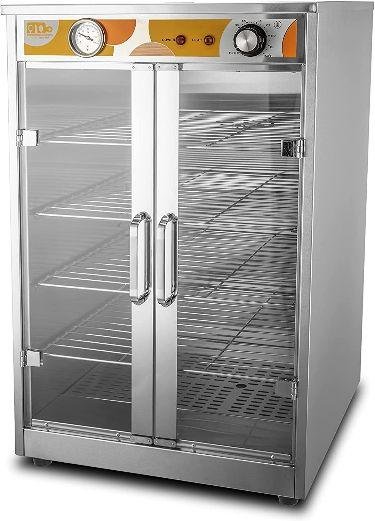
Commercial Hot Holding Cabinets Selection Criteria
Commercial hot holding cabinets are critical thermal storage assets for banqueting halls, QSR chains, and central kitchens. Engineered to maintain prepared meals safely above the food safety threshold (+60°C/140°F), these insulated cabinets preserve food texture, moisture, and plating appearance without continuing the cooking process.
Technical Features of Commercial Holding Cabinets
Precision humidity control and thermal containment prevent food degradation over time.
Controlled Humidity Injection Systems
Advanced holding units incorporate water reservoirs with independent heating elements to control relative humidity within the cavity. This prevents starches, proteins, and baked items from drying out during extended holding windows.
High-Density Polyurethane Insulation
Commercial holding cabinets feature fully insulated wall panels and doors. Precision thermal insulation reduces standby power consumption and keeps exterior side walls cool to the touch.
Comparison: Dry Holding vs Humidified Holding Cabinets
| Feature / Criteria | Dry Hot Holding Cabinets | Humidified Holding Cabinets |
|---|---|---|
| Thermal Mechanism | Radiant or convection dry heat elements | Dual heat and water vapor system |
| Food Texture Outcome | Preserves crispy exteriors and crusts | Retains internal moisture and tenderness |
| Pan Capacity Range | Standard 10 to 20 sheet pan capacity | Standard 10 to 20 sheet pan capacity plus water tray |
| Best Application | Fried chicken, french fries, and breaded items | Rice dishes, roasts, gravies, and baked pasta |
Selection Criteria and Cabinet Maintenance
Gasket audits and water pan descaling ensure consistent temperature holding.
Magnetic Door Gaskets & Heavy Latches
Ensure units feature heavy-duty perimeter magnetic door gaskets to prevent heat leakage when doors are opened frequently during rush periods.
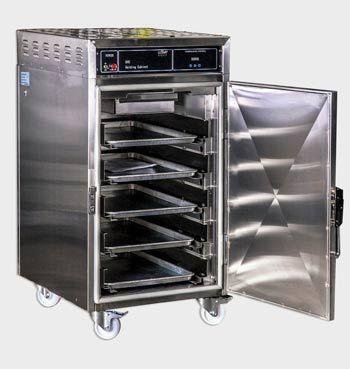
Daily Water Pan Sanitation & Descaling
Drain and clean the internal moisture reservoir daily. Periodically remove hard-water scale from internal heating rods to maintain optimal thermal responsiveness.