

Posted At: Sep 03, 2026 - 41 Views
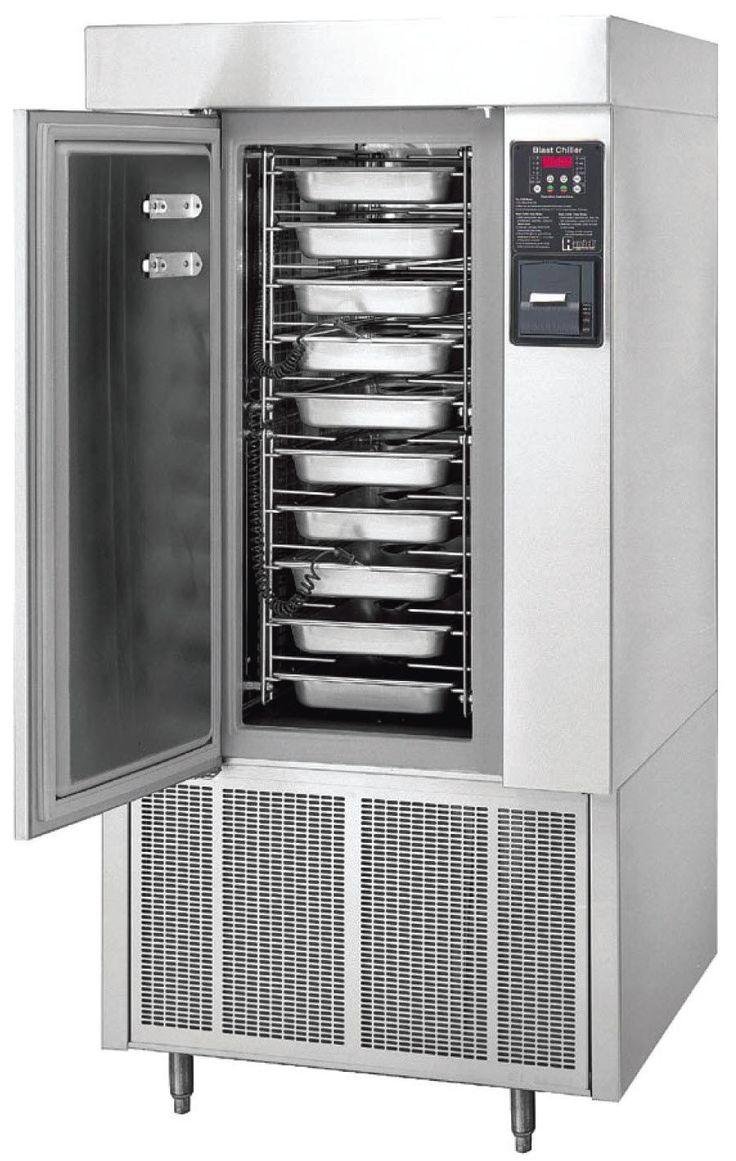
Commercial Blast Chillers & Shock Freezers Technical Selection
Commercial blast chillers and shock freezers are essential food safety assets for central production kitchens, banqueting facilities, and high-volume catering operations. Engineered to pull down core food temperatures rapidly from +70°C to +3°C in under 90 minutes (or -18°C for deep freezing), these units bypass the bacterial danger zone while locking in food moisture and structural integrity.
Technical Features of Commercial Blast Chillers
Rapid thermal extraction protects cell walls and prevents moisture migration.
Micro-Crystallization Preservation Architecture
Conventional slow freezing creates large ice crystals that puncture cell walls, resulting in significant drip loss during thawing. Blast freezing creates micro-crystals, maintaining the exact texture, flavor, and weight of cooked proteins and delicate produce.
Multi-Point Core Temperature Needles
Units incorporate heated core temperature probes inserted directly into the center of thick food items. The onboard controller automatically modulates fan speeds and air temperatures based on real-time internal core readings.
Comparison: Soft Chilling vs Hard Shock Freezing
| Feature / Criteria | Soft & Hard Chilling Cycles | Deep Shock Freezing Cycles |
|---|---|---|
| Target Temperature | Reduces core temp to +3°C | Reduces core temp down to -18°C |
| Standard Duration | Completed within 90 minutes | Completed within 240 minutes |
| Product Outcome | Ready for immediate plating or short-term holding | Stabilized for long-term inventory storage |
| Best Application | Delicate vegetables, rice, sauces, cooked pasta | Raw proteins, inventory bulk prep, pastry bases |
Selection Criteria and Blast Chiller Maintenance
Digital temperature logging and sensor sanitization preserve operational standards.
Integrated HACCP Data Logging
Select models featuring integrated USB or Wi-Fi data logging interfaces. Automatic recording of time-temperature profiles satisfies health inspection requirements and confirms food safety parameters.
Evaporator Coil Maintenance & Probe Care
Sanitize the core probe with alcohol wipes after every cycle to prevent cross-contamination. Clean lower condenser coils monthly to ensure continuous high-velocity airflow across evaporator coils.